One item on the Kentucky ballot could limit governor pardons after Bevin controversy. Here's how
Published in News & Features
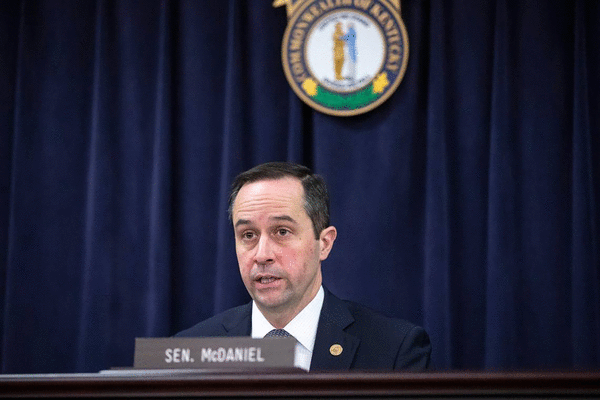
LEXINGTON, Ky. — An upcoming amendment on the general election ballot could limit when Kentucky’s governor is able to pardon people convicted of crimes.
Voters will see a constitutional amendment on the Nov. 3 ballot that would prevent the state’s governor from issuing pardons for roughly three months — 60 days before an election and five weeks after.
State Sen. Chris McDaniel, R-Hyland Heights, says he proposed the amendment after controversial pardons from previous Republican Gov. Matt Bevin, though those occurred several years ago. A pardon is an act of official forgiveness for an offense that can only be granted by the governor.
In 2019, after Bevin lost his election to current Democratic Gov. Andy Beshear, he granted clemency to hundreds of people. Most of them were convicted of low-level offenses, but several featured high-profile cases that dismissed the charges of murderers and child rapists.
One of which was Patrick Brian Baker, who had served two years of a 19-year-sentence for a fatal home invasion in Knox County.
McDaniel said if approved by the voters, the amendment would hold officials accountable around election time, and the measure wouldn’t leave powers solely with the governor.
What the amendment would do
The proposed amendment would impose an election-period restriction to the Kentucky Constitution to avoid late-hour pardons.
In a one-on-one interview with the Lexington Herald-Leader, McDaniel said the amendment would hold a governor more accountable before and after the election.
“It’s to keep somebody from being able to issue pardons when there’s no accountability at all, right?” McDaniel said. “After the voters have made their decision, there’s no accountability left.”
“The portion beforehand is for the same reason, but a different mechanism to introduce accountability,” McDaniel continued. “So, 60 days is enough time that if a governor issues a pardon, between the news media, local communities, the justice system as a whole, the word can get out there, and the governor or their party has to stand in front of the voters, which, for politicians, there’s no greater level of accountability than in the ballot box.”
If approved by the voters, the amendment’s change would take effect ahead of the 2027 gubernatorial election.
The window of pardon restrictions for that election would begin Sept. 3, 2027.
What the amendment does not do
The amendment does not limit the governor’s ability to issue pardons, McDaniel said, just the time frame.
The approval of the amendment would not require an additional board to be established, or create further hurdles for voters or lawmakers to jump through after the fact, McDaniel said.
McDaniel said the change of any person’s conviction should not solely lie with the governor as it currently does. The timeframe gives accountability to the voters while not changing the governor’s Constitutional powers to issue pardons.
“The pardon is the only thing that touches the system of justice, where there’s no check and no balance whatsoever,” McDaniel said. “It is an absolute power, and so the system allows for new evidence to have emerged and changes to be made.”
McDaniel said this amendment change is not designed with the current governor in mind, as some have speculated.
“This isn’t about the governor. This is about a governor; any governor,” McDaniel said. “This is about you know the frailties of human beings in addressing those and making our system better.”
©2026 Lexington Herald-Leader. Visit at kentucky.com. Distributed by Tribune Content Agency, LLC.





Comments