On Nutrition: Safe catches
Published in Nutrition
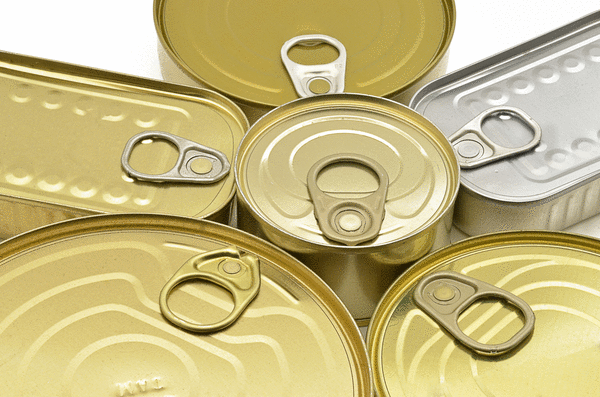
A recent column on best seafood choices brought this question from a reader in Brazoria County, Texas:
“Canned tuna in olive oil is what I typically eat for my weekly fish intake. I typically drain most of the olive oil unless it is going into a salad. I could easily eat at least three or four cans of tuna per week, but would love your feedback regarding mercury/safety issues. How many cans per week is it safe to eat due to mercury issues?”
First let me explain a little about mercury, a natural element found in the earth’s rocky crust. In the environment, it is present as methylmercury which is toxic to us humans. We are exposed to at least trace amounts in the air — especially in industrial areas — and in natural bodies of water where fish swim.
Fish absorb mercury into their flesh, which happens to be the healthful protein we seek nutritionally. Interestingly, fish oil — the fat from fish — is generally free from mercury.
We can and should, however, seek out fish meals due to their incredible nutritional and health value. Regular fish intake (two to three servings or 8-12 ounces a week) has shown to reduce our risk for heart disease, type 2 diabetes and certain eye diseases such as macular degeneration. Fish intake may also help slow the decline in our thinking skills as we age.
You didn’t mention what species of tuna you eat, but that may help you decide how much tuna to eat in a week. Larger fish absorb more mercury as they grow. So albacore, a larger white tuna, generally contains more mercury than light tuna, which is often a mix of smaller fish such as skipjack.
Also remember that mercury in fish exists in trace amounts and mercury poisoning due to fish intake in the United States is extremely rare. Surprisingly, recent tests by Consumer Reports found that 80% of the canned tuna samples actually contained lower mercury levels than those found in samples measured by the FDA from 1990 to 2010.
You can stay safely within current guidelines if you choose to eat two to three (5 ounce) cans of tuna a week. Limit albacore tuna to not more than one of those servings a week.
Stricter guidelines exist for pregnant women and children, since they are more vulnerable. According to the FDA, these groups should limit light tuna to 12 ounces a week or just 4 ounces of albacore (about the amount in a 5-ounce can minus the water or oil). Some experts recommend pregnant women avoid any type of canned tuna.
So keep enjoying the health benefits of tuna and other fish. Just mix it up on a weekly basis with other seafood such as salmon.
©2026 MediaNews Group, Inc. Distributed by Tribune Content Agency, LLC.









Comments