Commentary: Blue states' wealth tax trap would crush American's prosperity
Published in Op Eds

The left claims to support affordability but often backs tax hikes on families and businesses. While intended to fund social programs and aid vulnerable groups, these policies tend to raise prices and living costs for Americans.
Sen. Bernie Sanders, I-Vt., and Rep. Ro Khanna, D-Calif., recently introduced legislation that would impose a 5% annual wealth tax on the net worth of billionaires to fund Medicare, Medicaid, free childcare, and “affordable” housing. The destructive duo’s national billionaire tax was announced at a time when wealth taxes are gaining traction in Democrat-run states and localities across the country.
For example, New York City Mayor Zohran Mamdani has been pressuring Albany to approve his 2% wealth tax on residents earning over $1 million annually. In California, a “one-time” 5% wealth tax on individuals worth more than $1 billion is being circulated as a citizen-led ballot initiative.
Ironically, these two states already have exorbitant tax rates, and such proposals would only exacerbate the burden that they want the most productive constituents to bear. According to the Tax Foundation, New York and California are ranked 50th and 48th, two of the worst in the country, for their tax competitiveness in 2026.
New York City’s wealthiest residents currently face a combined state and local tax rate of 14.78%, with the wealthiest Californians facing 13.3%. Coupled with the proposed wealth taxes of 2% in New York and 5% in California, the top bracket would increase to 16.78% and 18.3%, respectively — this on top of high sales, property, and corporate rates.
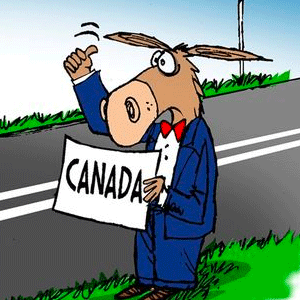
Burdensome taxes, and the threat of even more, impacts migration trends by encouraging people to vote with their feet.
Meta CEO Mark Zuckerberg and his wife recently revealed plans to escape to the tax haven that South Florida provides. Tech investor and AI czar David Sacks is opening a new office in Texas and conservative investor Peter Thiel officially made Miami, Florida his new base for residence and business.
Many high-earners are leaving California for low-tax states, illustrating capital flight as a dire consequence of high wealth taxes. When these high-earners leave, they take with them their taxable incomes, businesses, and spending power, leaving blue states—and remaining residents—worse off.
The Laffer Curve demonstrates that increasing tax rates beyond a certain point actually lowers tax revenue for the government, because tax bases are not static when faced with higher costs. As individuals and businesses move across state lines in dissatisfaction, fewer firms and less competition push prices higher for consumers.
The Bureau of Economic Analysis finds that nine of the 10 most expensive states are Democrat-led. California ranks 1st and New York is 5th, with prices drastically above the national average.
The message is clear: Taxing high-earner's fortunes leads to misfortune for everyone else.
Both Democrats and Republicans alike recognize this risk. Even Gov. Gavin Newsom opposes California’s wealth- tax initiative, noting the consequences of capital flight which would cut funding for schools, public safety, and other core services—the opposite of what these redistributive policies are supposedly intended to do.
Economic history also validates these concerns. California suffered a net loss of $16.1 billion in adjusted gross income and $1.7 billion in lost revenue following 2016 tax hikes. With blue lawmakers pushing for higher rates, losses may be even more profound.
Instead of burdening citizens with high rates and hemorrhaging high-earners, blue states should look to cultivate a pro-growth posture through low regulation and tax incentives. Red states like Florida consistently demonstrate the effectiveness of this philosophy.
The Tax Foundation ranks Florida 5th nationally for its tax competitiveness with no income tax and a 5.5% corporate tax rate. By attracting investment and encouraging migration into Florida, both residents and the government benefit.
The Council of Economic Advisors reports that states with favorable tax environments experience greater investment and innovation, booming businesses and entrepreneurship, wage increases, an influx of taxpayers, and state-wide economic growth. States with low taxes are evidence that encouraging business expansion and enabling people to retain more of their earnings creates thriving communities.
Instead of the harmful redistributive wealth taxes being pushed in blue states by socialists like Sen. Sanders and Mayor Mamdani, low-tax policies have been shown to promote prosperity that Americans in every state can feel.
____
Nicole Huyer is a Senior Research Associate in The Heritage Foundation’s Thomas A. Roe Institute for Economic Policy Studies. Camilla Cort is a former member of Heritage’s Young Leaders Program.
_____
©2026 Tribune Content Agency, LLC.

















































Comments