Commentary: Beyond campus walls -- Why the attack on minority support should worry every donor
Published in Op Eds
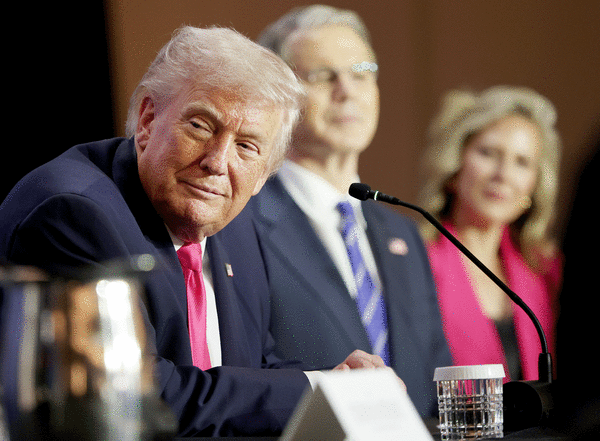
In President Donald Trump’s latest attempt to bring private universities to heel through policy change in the tax code, the administration is threatening to revoke tax-exempt status from schools that offer targeted support to minority students. This move should have everyone who cares about education, public works, and charitable giving ringing the alarm bell.
U.S. citizens have enjoyed tax incentives to support the good works, charitable causes, or public-serving organizations we care about for more than a century—since the implementation of the Revenue Act of 1913. Beginning in 1969, entities like private schools and colleges, museums, arts centers, and charitable foundations qualified as not-for-profit, donation-eligible organizations through section 501(c)(3) in the U.S. tax code. A not-for-profit designation grants the institution federal tax-free status, meaning it doesn’t pay federal taxes, and allows taxpayers to deduct donations from their federal tax return. Federal tax deductions incentivize individual and corporate donors to open their wallets for charitable giving.
Qualifying rules for 501(c)(3) status include that the organization must have a board of trustees, a set of bylaws, return no profits back to its donors, not engage in political activity, and exist to serve the public good.
By regulating what qualifies as a “public good,” President Trump hopes to give the IRS outsized influence over where your charitable dollars can go and how they are used.
The president’s latest tactic against higher education grants the IRS power to revoke the not-for-profit status for any school or university deemed to have discriminatory practices in admissions, scholarships, policy, or programs. In proposing this rule, President Trump is invoking a little-used interpretation of 501(c)(3) stemming from a 1983 Supreme Court ruling that establishes not-for-profit status can be revoked by the IRS if an organization is in opposition to “established public policy.”
It’s reasonable, of course, that the federal government should deny tax-protected status to certain organizations — those committed to violence or hate toward its citizenry, for example. But this rule change is less a shield against a threat to public safety than a weapon against ideas and values the current administration finds objectionable.
Given the deep societal division over determinants of racial discrimination and the number of lawsuits that appear against executive orders and rule changes invoking racial discrimination, it’s a stretch to claim any consensus regarding “established public policy” around race. But this administration excels at exploiting this nebulous common-good policy language, and this maneuver is another attempt to exert ideological control over private institutions through non-legislated means.
Racial discrimination in college admissions was already addressed by the court; the Supreme Court ruled in 2023 that race-conscious admissions scales were in violation of the Civil Rights Act, immediately obliterating affirmative action, squelching admission policies aimed at increasing minority populations on campus and prompting scholarship funding targeting those same students to fall to 11% of total funding dollars.
Under further wolf-cries of discrimination, schools and universities have already scrubbed DEIA-based policy and programming. But Trump now seeks unilateral rule changes that apply to any “school-administered or school-supported” program, effectively eliminating all academic or social support for students at private institutions who fall outside of white majority populations.
Treasury Secretary Scott Bessent indicated that revamped programs that reframe prior DEIA initiatives and actually comply with current law are specifically called out as suspect under the proposed rule change. Apparently, it is Bessent, not legislation or the courts, who will tell you what discrimination is and where your charitable dollars can go.
While the rule change currently exempts religion-based schools and targets racially based discrimination, there is no reason to think that the same tactics won’t be applied to gender, age, or any other class that the Trump administration systemically targets. If this lever against the public good is pulled, we open nearly every service institution and public organization Americans value to subjective and punitive discrimination rulings by a politicized IRS.
What happens when research into women’s health at a private hospital is deemed sexual discrimination? When funding local programs to combat gun violence in Black neighborhoods is viewed as contrary to “established public policy?” When the IRS says we can no longer donate to the Girl Scouts?
Americans have the right to support the causes, social organizations, and local institutions of their choice through the charitable donation clause established in our tax code for over 100 years. At a time when the affordability crisis threatens all classes other than the richest, government interference in our institutions of public good that directly serve the needs of our communities would be a devastating blow. Public comment on the proposed rule changes is open until Nov. 3 and can be submitted through the Federal eRulemaking Portal. Your contributions matter to the 1.6 million 501(c)(3) organizations in the United States, and to our collective values.
____
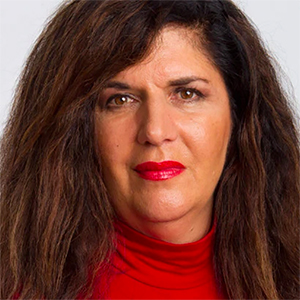
Terri Ciofalo is a Public Voices Fellow of the OpEd Project and the University of Illinois System. She teaches not-for-profit arts management and leadership and is Associate Director of the Krannert Center for the Performing Arts at the University of Illinois Urbana-Champaign.
_____
©2026 The Fulcrum. Visit at thefulcrum.us. Distributed by Tribune Content Agency, LLC.








































Comments