Five tips to better utilize your attic
Published in Home and Consumer News
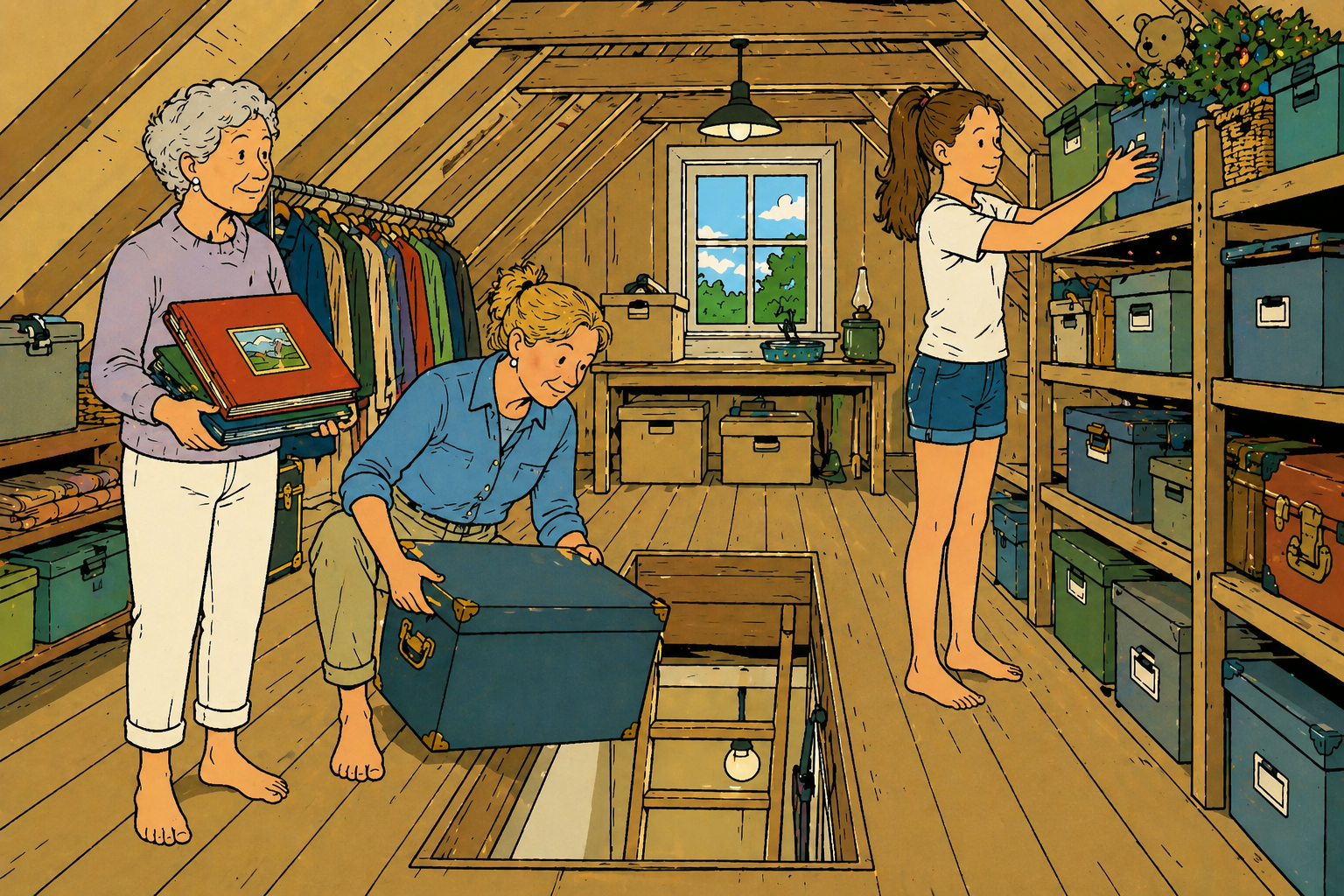
For many homeowners, the attic exists in a strange category of domestic space: too useful to ignore, too inconvenient to fully embrace. It becomes the place where holiday decorations go to disappear, where old toys quietly age in cardboard boxes, and where half-finished projects wait for a future version of ourselves who is somehow more organized and more energetic.
But home organization experts say attics are often dramatically underused — or worse, used in ways that can damage belongings, create safety hazards, or waste valuable square footage.
The good news is that most attics do not require expensive renovations to become more functional. In many cases, a few strategic changes can transform a cluttered overhead void into one of the most practical storage areas in the home.
Here are five ways homeowners can make better use of their attics without turning them into dangerous or chaotic dumping grounds.
Think in Zones, Not Piles
One of the biggest mistakes homeowners make is treating the attic as a single giant storage bin.
Professional organizers recommend dividing attic space into clear categories or “zones.” Holiday decorations might occupy one section, archived paperwork another, and seasonal clothing a third. Creating physical boundaries reduces the tendency for items to migrate into sprawling, unstable stacks.
Clear plastic bins are especially popular because they allow homeowners to identify contents without opening every container. Labeling matters too — not just “Christmas,” but “Christmas Lights,” “Tree Decorations,” or “Outdoor Decor.”
Experts say specificity prevents the attic from becoming an archaeological dig every December.
There is also a psychological advantage to organized zones. People are more likely to maintain orderly systems when the structure is visually obvious. A labeled shelf feels intentional. A random mountain of boxes feels temporary, even when it remains untouched for ten years.
Understand Temperature Limits
Attics are not climate-controlled storage units, and many homeowners underestimate how extreme attic temperatures can become.
In summer, attic temperatures can soar well above 120 degrees in many parts of the United States. During winter, they may approach outdoor temperatures. That fluctuation can ruin sensitive items surprisingly quickly.
Photographs, vinyl records, candles, electronics, batteries, certain plastics, old videotapes, musical instruments, and important documents are all poor candidates for attic storage.
Wood furniture may warp. Adhesives fail. Fabrics can degrade faster than expected.
Home inspectors say attics should primarily store durable, non-sensitive items that can tolerate heat, cold, and humidity shifts. Artificial trees, luggage, empty storage containers, seasonal décor, camping gear, and some sporting equipment generally fare much better than family heirlooms.
If homeowners truly want to maximize attic storage long term, improving insulation and ventilation may offer a better return than simply adding more shelving.
Improve Lighting Before Anything Else
Many attics suffer from a simple but significant problem: people cannot safely see what they are doing.
A single exposed bulb hanging from a ceiling joist may technically count as lighting, but it does little to prevent falls, broken boxes, or accidental ceiling damage.
Contractors say improving attic lighting is often the most overlooked upgrade homeowners can make.
Bright LED shop lights are inexpensive, energy efficient, and dramatically improve visibility. Battery-powered motion lights can help illuminate awkward corners or pull-down stair access points.
Better lighting also changes how people psychologically interact with the space. A dim attic feels hostile and temporary. A well-lit attic feels usable.
That matters because homeowners are far more likely to keep organized spaces functional if they do not dread entering them.
Safety experts also stress the importance of creating clear walking paths. Accidentally stepping between ceiling joists can result in injuries and expensive drywall repairs below.
In other words: before adding more storage, make sure the attic is navigable.
Use Vertical Space Carefully
Attics often contain more usable cubic space than homeowners realize, particularly near the center where roof pitch is highest.
Freestanding shelves, low-profile cabinets, and suspended hanging systems can dramatically increase storage efficiency while keeping items accessible.
But experts caution against overloading attic floors. Many residential attics were designed primarily for insulation and limited storage, not heavy concentrated weight.
Books, old magazines, exercise equipment, and large furniture pieces can create structural strain if stacked excessively in one area.
Homeowners unsure about weight limits should consult a contractor or structural professional before expanding attic storage aggressively.
There is also a practical rule many organizers repeat: if accessing an item requires moving six other things first, the system will eventually fail.
The best attic setups prioritize retrieval as much as storage.
Do Not Store Your Guilt Up There
Perhaps the most important attic advice has less to do with shelving and more to do with honesty.
Attics often become emotional holding areas for unresolved decisions. Boxes of childhood belongings, abandoned hobbies, inherited furniture, and projects people no longer realistically intend to finish accumulate overhead because the attic delays judgment.
Professional organizers sometimes refer to this as “aspirational storage.”
The treadmill waiting for future motivation. The broken lamp awaiting repair since 2014. The bins of fabric for a quilting hobby that never quite materialized.
An attic can certainly preserve meaningful family history. But experts warn that storing too many emotionally complicated objects creates invisible stress. Clutter rarely feels neutral for long.
Many homeowners find that periodic attic cleanouts become unexpectedly emotional experiences — not because of the objects themselves, but because those objects represent older versions of their lives.
The most effective attic spaces balance practicality with selectivity. Storage should support the present household, not bury it.
In the end, the best-utilized attic may not be the fullest one. It may simply be the one where every stored object still has a clear reason to remain there.
========
Lenora Vance is a home and lifestyle features writer specializing in practical organization, domestic design, and the emotional realities of modern living spaces. Her work focuses on the intersection of utility, memory, and everyday household habits. This article was written, in part, utilizing AI tools.







Comments