The Dog’s-Eye View: How Traveling With a Senior Dog Changes the Pace—and Improves the Trip
Published in Cats & Dogs News
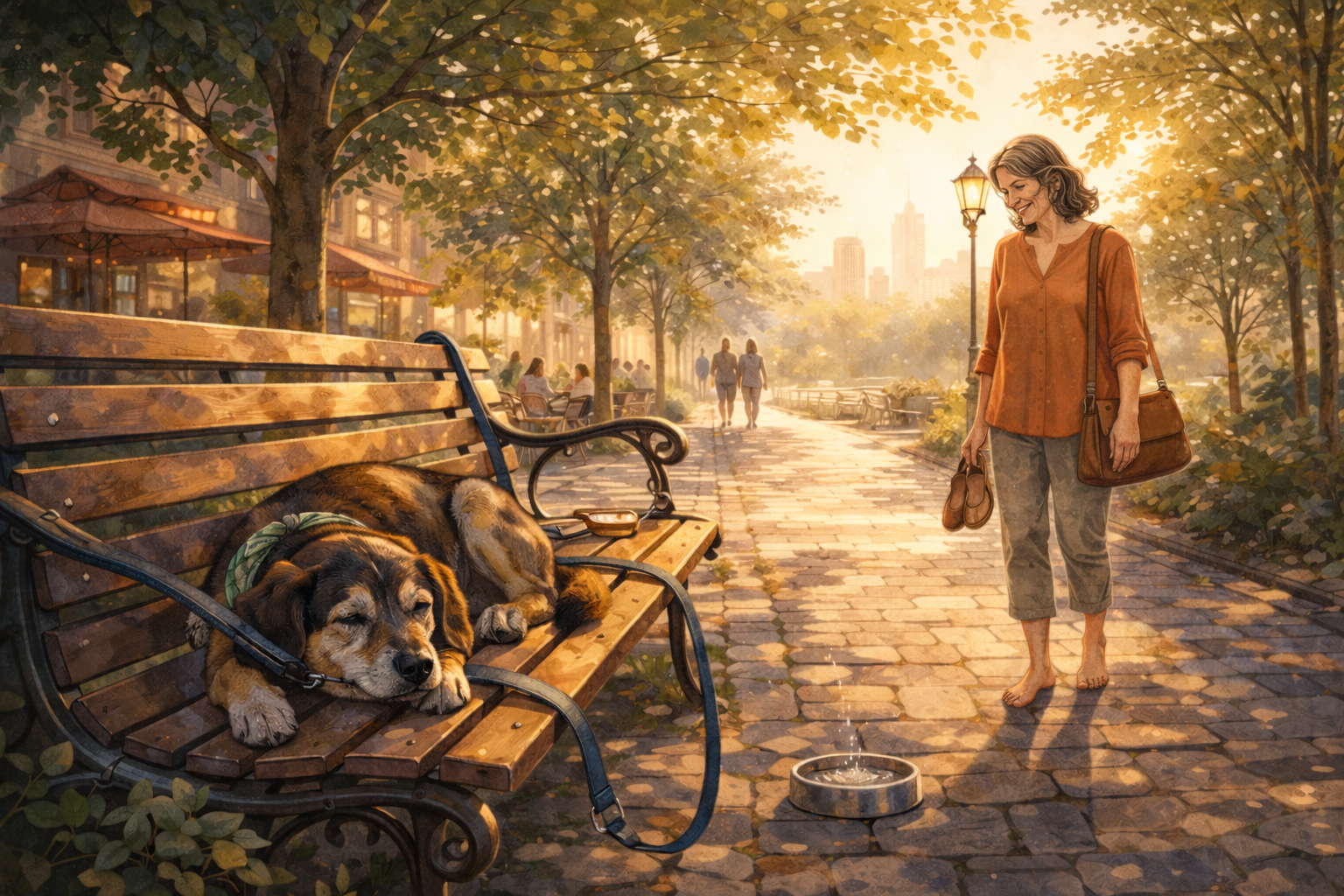
Travel has a way of revealing who’s really in charge of your schedule. For some people it’s the museum clock. For others it’s the dinner reservation. For me, increasingly, it’s a senior dog who has very clear opinions about heat, distance, and how long a “quick walk” ought to be.
Traveling with an older dog forces a recalibration. Not a dramatic one. Just enough to unsettle the old habits of optimization and urgency. Routes shorten. Detours increase. The day bends around shade, water, and the availability of somewhere soft to sit for a few minutes. At first, it can feel like a limitation. Then, almost imperceptibly, it starts to feel like a gift.
Senior dogs do not care about your itinerary. They care about surfaces, smells, temperatures, and tone. They notice which streets radiate heat and which hold onto cool. They prefer the long way if it’s quieter. They will stop, decisively, when it’s time to stop. You can argue, but you will lose.
That enforced attentiveness changes how you move through a place. You stop rushing from attraction to attraction and start traveling in segments. One block. One bench. One café patio. One shaded park. You begin to see a city as a series of livable moments rather than a list of highlights.
You also begin to notice kindness more. The café that brings out a water bowl without being asked. The shopkeeper who waves you inside so your dog can cool off. The stranger who tells you which side street is flatter, quieter, easier on old joints. These interactions don’t show up in guidebooks, but they linger longer than most landmarks.
There’s a humility built into this kind of travel. A recognition that the trip is no longer about extracting maximum value from a destination. It’s about mutual comfort. About choosing routes that work for both of you. About listening — not just to your dog, but to your own energy level as well.
Senior dogs are excellent editors. They strip a day down to what actually matters. Fresh air. A good meal. Familiar rhythms in unfamiliar places. They remind you that travel doesn’t need to be ambitious to be meaningful. It needs to be humane.
The pace slows, but the awareness sharpens. You notice the texture of the pavement. The timing of the light. The places locals pause without realizing it. You start choosing cafés not for reputation, but for chairs with backs. You learn which parks empty out in the afternoon. You learn, slowly, how a place breathes.
And at the end of the day, when you return tired but not depleted, there’s a particular satisfaction in knowing the trip worked for both of you. That no one was dragged along. That the journey was shaped by care rather than conquest.
Travel culture loves youth, speed, and novelty. Senior dogs offer a quieter philosophy: go gently, stop often, and pay attention. It turns out that’s not just good advice for aging companions. It’s good advice for travel itself.
========
James Holloway writes about travel, place, and the unnoticed negotiations that shape a day on the road. He travels at a slower pace than he once did, largely by choice and partly at the insistence of his senior dog, Mason. Together they favor shade, benches, familiar routes, and the kind of journeys where getting there matters less than how it feels along the way. This article was created, in part, utilizing AI tools.








Comments