How to keep a bored cat entertained
Published in Cats & Dogs News
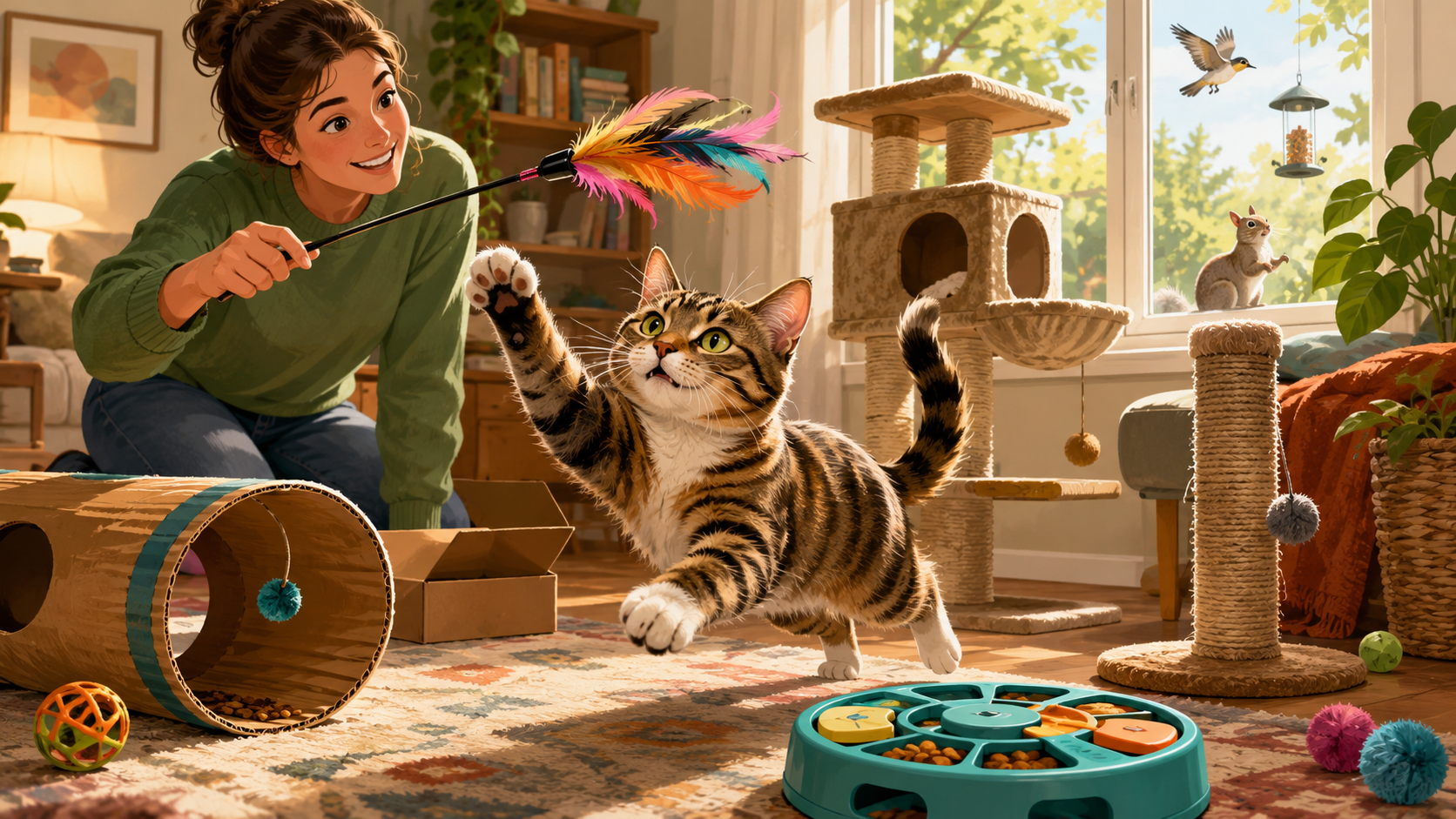
Keeping a bored cat entertained starts with understanding what boredom looks like in the first place. Cats may seem independent, but they are intelligent, curious hunters with strong instincts to chase, climb, scratch, hide and explore. When those instincts are not given a healthy outlet, a cat may turn restless, destructive or withdrawn.
A bored cat may knock things off shelves, scratch furniture, overgroom, pester other pets, yowl at night or sleep more than usual. Some cats become clingy, while others retreat. The solution is not constant attention. It is creating a home where the cat has chances to think, move and make choices throughout the day.
Rotate toys to keep them fresh
Cats often lose interest in toys that are left out all the time. Instead of buying new toys constantly, keep a small stash and rotate them every few days. A crinkle ball, soft mouse, feather wand, kicker toy and catnip toy can all feel new again after being tucked away for a week.
Interactive toys are especially useful because they allow cats to mimic hunting. Wand toys, fishing-pole toys and ribbon-style teasers let cats stalk, chase, pounce and “catch” prey. The key is to move the toy like something alive. Drag it behind a chair, let it disappear around a corner, pause, then twitch it slightly. That is far more interesting to a cat than waving it randomly in the air.
End play sessions by letting the cat catch the toy. This gives the game a satisfying finish and helps prevent frustration.
Make meals more interesting
Food can be one of the easiest ways to entertain a bored cat. Instead of serving every meal in a bowl, use puzzle feeders, treat balls or small hidden portions around the house. Cats are natural hunters, and making them “work” for part of their meal gives them mental stimulation.
You can start simply by placing a few pieces of dry food in an egg carton, paper towel tube or muffin tin. Some cats catch on quickly, while others need an easy introduction. The goal is not to frustrate the cat, but to make eating more engaging.
Wet food can also be used creatively. A lick mat, shallow plate or slow feeder can turn a quick meal into a calming activity. For cats that wake their owners before dawn, a timed feeder may help provide a small early breakfast without rewarding 4 a.m. yelling.
Create vertical territory
Cats feel safer and more confident when they can get up high. A cat tree, wall shelf, cleared bookcase or sturdy window perch can give a bored cat a place to climb, lounge and watch the household from above.
Vertical space is especially important in homes with multiple pets. A cat that can retreat to a high perch may feel less trapped and less likely to lash out. Even a simple chair near a window can become prime cat real estate if it offers a good view.
Window watching is underrated entertainment. Birds, squirrels, falling leaves, passing cars and people on the sidewalk can keep a cat occupied for long stretches. A secure window perch or cat-safe screened window can turn an ordinary room into a daily theater.
Offer safe scratching choices
Scratching is not bad behavior. It is a normal cat behavior that stretches muscles, marks territory and keeps claws healthy. A bored cat without good scratching options may target couches, rugs or door frames.
Offer more than one type of scratcher. Some cats prefer vertical posts, while others like flat cardboard pads or angled scratchers. Texture matters, too. Sisal, cardboard, carpet and wood all feel different under a cat’s claws.
Place scratchers where the cat already wants to scratch, not tucked away in a forgotten corner. Many cats like to scratch after waking up, near doorways or close to favorite resting spots. A little catnip or silver vine can help introduce a new scratcher.
Build hiding places and forts
Cats love small spaces. A cardboard box, paper bag with handles removed, tunnel or blanket draped over a chair can become an instant hideout. These spaces give cats a sense of security and also create opportunities for play.
A cat tunnel can turn a short chase game into something much more exciting. Toys can disappear inside it, paws can dart out, and the cat can launch surprise attacks. Boxes can be rearranged, stacked or connected to create a low-cost playground.
Do not underestimate the appeal of ordinary household items. Many cats would rather explore a delivery box than an expensive toy. The trick is to refresh the setup before it becomes boring.
Schedule short daily play sessions
Cats do not usually need hours of play at once. Most do well with several short sessions, especially in the morning and evening. Ten minutes of active play can make a major difference for a restless indoor cat.
Try to match the cat’s natural rhythm. Many cats are most active around dawn and dusk. An evening play session followed by dinner can help satisfy the hunt-eat-groom-sleep cycle and may reduce nighttime chaos.
Older cats still need stimulation, but the pace should fit their bodies. Gentle wand play, food puzzles, brushing, window time and low climbing areas can keep a senior cat engaged without overexertion.
Teach simple tricks
Cats can be trained, and many enjoy it when the sessions are short and positive. Clicker training, target training or simple cues such as “sit,” “come” or “high five” can give a cat a mental workout.
Use tiny treats and stop before the cat loses interest. Training should feel like a game, not a test. Even a few minutes a day can build confidence and strengthen the bond between cat and owner.
Training is also useful for practical skills. Teaching a cat to enter a carrier, touch a target or come when called can make vet visits and emergencies easier.
Consider companionship carefully
Some bored cats benefit from another cat, but a second pet is not a guaranteed fix. Cats are territorial, and introductions must be slow. A poorly matched companion can create stress instead of enrichment.
Before adding another cat, improve the environment first. More play, more climbing space, more scratchers and more food puzzles may solve the problem without changing the household. If a new cat is added, each cat should have its own food area, litter box access, resting spots and escape routes.
Keep novelty in the routine
A cat’s world can become small when every day looks exactly the same. Small changes can help. Move a cat tree slightly, open a different safe room for exploration, place a toy in a new spot or bring out a box from the recycling pile.
You can also create scent enrichment. Catnip, silver vine, valerian root and fresh cat grass can provide safe sensory variety for many cats. Not every cat responds to every scent, so it may take some experimenting.
The best entertainment plan is not complicated. It is a mix of movement, hunting games, food challenges, climbing, scratching, hiding and affection on the cat’s terms. A bored cat does not need a circus. It needs a home that lets it be a cat.
With a little creativity, even a quiet apartment can become an engaging feline world. The reward is a calmer, happier cat — and a home with fewer knocked-over cups, shredded corners and midnight complaints.
========
Maren Ellsley is a companion animal writer who focuses on practical pet care, home life and the everyday bond between people and their animals. Her work explores simple ways to make pets healthier, happier and better understood. This article was written, in part, utilizing AI tools.








Comments