Stephen L. Carter: Let candidates place bets on themselves -- at least sometimes
Published in Op Eds

As a law professor and sometime libertarian, I’m of three minds about news that the prediction-market platform Kalshi has banned three candidates for public office for placing bets on their own races.
My first thought is purely libertarian: Kalshi is a private entity, free to set its own rules and do business or not with whomever it pleases, provided that it avoids significant harm to others. If the candidates violated the terms of service, that’s their own fault for not reading the fine print.
My second thought is purely practical: In a world where every month seems to feature another athlete banned for betting on sports, what momentary madness would make politicians imagine that they wouldn’t get caught? (1) Yes, yes, we see a constant stream of candidates whose hopes to hide old scandals have been dashed. But why, in the midst of an electoral battle, go out and create new ones?
My third thought is: But wait! If the candidates bet that they’d win their races, as appears to be the case for at least two of them, what’s the big deal? Aren’t those bets just a signal of their confidence? Mightn’t it be good that those running for office think they’re going to win?
Prediction markets sell contracts, usually a "Yes" or "No" on a future event. As of this writing, for instance, a contract that pays $1 if Tulsi Gabbard is the next member of President Donald Trump’s cabinet to depart can be had on Kalshi for 57 cents. Now imagine that Carter is a candidate for office. He thinks he has about a 60% chance to win. If the relevant contract costs 45 cents, buying makes sense.
What’s wrong with that?
The most obvious concern is that the candidate who is free to buy "Yes" is also free to buy "No" — and, like a basketball player who bets his own team will lose, Carter can easily increase the odds of defeat. A basketball player can intentionally miss shots, commit bad fouls, feign injury. Candidate Carter can say stupid and offensive things, confess to scandalous conduct, or just act like a fool out on the stump. True, none of these behaviors nowadays guarantees defeat for a politician, but all of them make winning harder.
The reason it’s problematic to bet against oneself, however, is to protect the integrity not of the prediction markets, but of the underlying activity: the sporting contest, for example, or the election. That big-money basketball or football games can be fixed is scary. That an election could be fixed is scarier still.
I’m just not sure that the political candidate who bets "Yes" presents the same risk.
Sports leagues prohibit their insiders from betting either way. They argue, with some force, that even betting on one’s own team to win a particular game can distort the results over the course of a season, as a coach or player has an incentive to shift personnel or efforts away from the games on which no bet has been placed.
An election, by contrast, is a long campaign culminating in a single event — the balloting — which is the only bet we’re talking about.
One might reasonably respond that whether candidates bet "Yes" or "No" on the outcome of their own campaigns, the mere fact that they’ve placed bets is bound to reduce trust in the political process itself. But that ship, sad to say, has departed our shores. I don’t think it’s coming back any time soon.
Besides, candidates confident enough to bet on themselves — more so, confident enough to do it publicly — are sending a strong signal about their own belief in victory. That signal, in turn, might bring more resources, in the form of campaign contributions.
One idea is to prohibit only "No" contracts, letting those running for office (and their staffs) place as many bets on their own victory as they like. A better solution would be to mandate transparency. If candidates or staff place wagers, they must be bought by personal, not campaign funds, and be public. Bonus: A candidate who buys No as a hedge will have to deal with the anger of potential donors who wonder whether the next dollar they give is wasted.
Yes, there are reasonable concerns about trading in financial markets based on nonpublic information.(2) The academic literature on whether to allow insider trading is sharply divided, but it’s easy to see that betting on the outcome of an electoral contest isn’t the same as betting which way a security will move. One may love or loathe Wall Street, but that’s where most people have lodged their retirement savings and investments. So it might make sense to keep regulation sharp.
But I can’t quite imagine anyone seriously planning to finance the golden years by betting on elections.
Don’t get me wrong. I’m not arguing that the world is going to end because a few politicians get kicked off an online betting platform. If they don’t like how they’re being treated, next time maybe they’ll read the fine print before signing up. But I also don’t think the world would end if those seeking public office are left free to vote Yes on their own chances. Our democracy faces larger challenges than candidates confident enough to put money on their own chances to win.
_____
(1) One candidate banned by Kalshi said that he hoped to get caught, in order to challenge the rule itself. That's not usually how contracts work, but it might be an interesting litigation.
(2) Consider the US soldier recently charged with using classified military information to win a $400,000 bet on Polymarket.
_____
This column reflects the personal views of the author and does not necessarily reflect the opinion of the editorial board or Bloomberg LP and its owners.
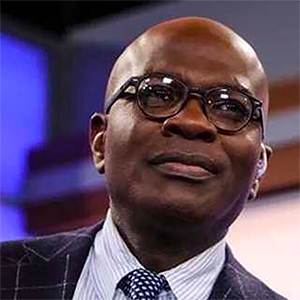
Stephen L. Carter is a Bloomberg Opinion columnist, a professor of law at Yale University and author of “Invisible: The Story of the Black Woman Lawyer Who Took Down America’s Most Powerful Mobster.”
_____
©2026 Bloomberg L.P. Visit bloomberg.com/opinion. Distributed by Tribune Content Agency, LLC.





























Comments