Stephen L. Carter: Free speech means Kimmel has the right to ridicule you
Published in Op Eds
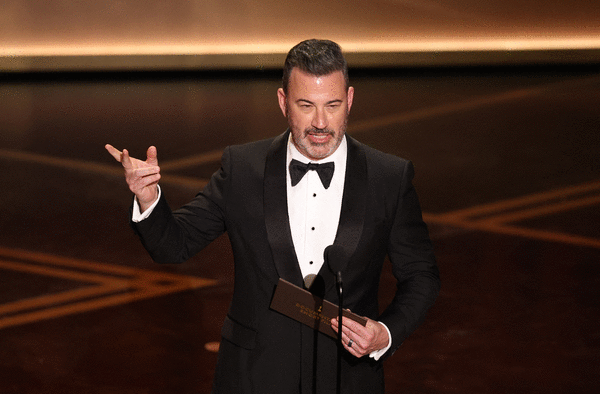
Here’s one of those remarkable coincidences: Immediately after the president and first lady called for late-night host Jimmy Kimmel to be kicked off ABC’s air after he made a cruel joke at their expense, the entirely independent investigators over at the Federal Communications Commission, in an entirely unrelated move, have decided that it was an entirely appropriate moment to launch an early review of the network’s broadcast licenses.
“The move is sure to be seen as retaliatory,” goes one report.
Ya think?
I know, I know: Brendan Carr, the FCC chair, insists that the early review is because of DEI concerns. But given the timing, that doesn’t pass the giggle test.
So let’s talk about what’s going on here. The Trump administration is, again, using its leverage against not only critics but mockers. And, yes, I know that Abraham Lincoln put newspaper editors in jail. I also know that the Biden administration, in its heavy-handed efforts to censor social media posts, hardly covered itself with glory. (And, yes, I protested at the time.) So the game is one that everybody plays.
But that’s no excuse. As I wrote in this space during last fall’s Trump-Kimmel dustup, there’s nothing new about the feds using the FCC to punish the news media for unfavorable coverage. But what Carr is up to is wrong. What Trump is up to is wrong. No excuse, no tu quoque. In a democracy, no lever of government power exists in order to retaliate against critics and mockers.
The freedom to mock the powerful is fundamental to any serious concept of democracy. And although I believe that democratic rhetoric should be civil, I accept that the freedom to mock must include the freedom to be vicious and cruel, angry and reckless, stupid and maddening.
I have no canine in this clash. I don’t watch late-night television, and I don’t give a fig for partisan politics. I do believe that democracy works best in a society characterized by certain virtues, civility in our discourse perhaps foremost among them. But democracy also needs freedom, and freedom means frictions, and among those frictions is incivility.
Let’s be clear. Kimmel’s “expectant widow” joke — no need to dignify it by repeating details — was, to say the least, stupid and cruel. That would be true even had it not been followed with an apparent attempt on the life of President Donald Trump. But even were there no First Amendment, no concern about government overreach and no fear of censorship, stupid and cruel would still be the style of the day. That’s how people talk, for better or worse. (No, for worse.) Not just comics. Politicians. Commentators. Ordinary folk on social media. Venting the impulse to say stupid and cruel things is what largely defines today’s public square.
But even were that not true, even were jokes like the one at issue hardly ever uttered aloud, as it happens we do have a First Amendment, there is reason to worry about government overreach, and censorship is surging into every corner of life.
And the Trump administration, to put the matter delicately, has shown no taste for resisting the urge to punish. Given the expectation that the Supreme Court will soon decide that the president indeed has broad powers over what we have been calling independent agencies, we should recognize that the number of levers is growing.
One would hope the opposition party would learn this lesson. Instead, one can only be depressed by the excited talk among Democrats about whom, when they take command, they will punish first. As I said, everybody gets to play.
True, we also have judges. And that’s good. Courts can’t be a true bulwark when armies of official censors are on the march, but at times they can slow things down. Just this week, the Supreme Court unanimously ruled the First Amendment forbids a state to demand donor lists from nonprofits whose causes the government happens to dislike. This outcome is clearly correct: The constant insistence that the public has a right to know who’s funding some advocacy group is a thinly veiled — very thinly veiled — effort to shut the group down.
Which brings us back to Kimmel. I hope that Disney stands up to Carr’s clumsy bullying. But whatever the outcome, I wonder whether this is yet another example of regulators chasing yesterday’s technology. Late-night viewing, Kimmel included, has been sliding fast. We’re a long way from 1992, when Johnny Carson’s final appearance on The Tonight Show drew — wait for it — an estimated 55 million viewers. That’s well over 10 times what anybody in that time slot draws now. It’s a little like how the FCC, back in the 1940s, thought radio too powerful, and tried to ban licensees from even running editorials.
Even if network television is, as it appears to be, in an unrecoverable decline, that would just mean the Trump administration, like most bullies, prefers to kick those who are struggling. Trump isn’t the first bully in the Oval Office; he won’t be the last. But the solution isn’t “Wait until we turn the tables.” It’s to find the party that promises to make the nonsense stop.
____
This column reflects the personal views of the author and does not necessarily reflect the opinion of the editorial board or Bloomberg LP and its owners.
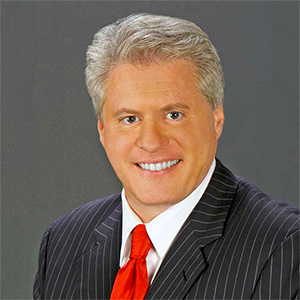
Stephen L. Carter is a Bloomberg Opinion columnist, a professor of law at Yale University and author of “Invisible: The Story of the Black Woman Lawyer Who Took Down America’s Most Powerful Mobster.”
©2026 Bloomberg L.P. Visit bloomberg.com/opinion. Distributed by Tribune Content Agency, LLC.













Comments