Commentary: How the waste in healthcare drives the US debt
Published in Op Eds

Washington treats healthcare spending like a moral obligation and interest payments like an accounting nuisance. They’re linked: Federal spending that is wasted in the healthcare system forces higher taxes or more borrowing, leaving less money for Medicare, defense or anything else. To slow deficit spending and the ballooning costs of the national debt, policymakers should start by eliminating a large preventable expense: waste in U.S. healthcare.
That waste isn’t abstract. It builds decision by decision, often when patients are least able to weigh trade-offs. In exam rooms, people ask whether a scan explains their pain or whether surgery is “necessary.” They assume that more intervention is better — and that physicians can decide on their own what approaches are best. Consumers of healthcare need plain-English, evidence-based guidance that links choices to outcomes and costs. Making decisions without that leads to waste. Multiply that gap across millions of encounters, and spending rises, deficits widen and interest costs climb.
One of us led the federally sponsored Spine Patient Outcomes Research Trial, the largest study of spine surgery. For herniated discs, this trial showed surgery brings modest average benefit. For most common spine conditions, benefits shrink as costs soar. Yet local capacity, custom and clinician conviction still steer care more than evidence — or patients’ informed preferences.
This isn’t a niche problem. Dartmouth Atlas research suggests that as much as half of U.S. healthcare spending yields no added health benefit. Other calculations find that about 25% of U.S. healthcare spending is waste (unnecessary services and administrative overhead) and that 27% could be saved by keeping people healthier up front rather than treating them later. That’s roughly a 52% savings opportunity — about $2.9 trillion in 2025 terms, much of which is currently coming out of public coffers.
Why does this excess spending persist? Policy and payment blur three types of care. Evidence-based care — vaccinations, beta-blockers after a heart attack — clearly helps patients, yet clinicians and systems often underuse it. Supply-sensitive care, the biggest spending category, rises with local capacity rather than need, creating wide regional variation without better outcomes. Preference-sensitive care involves trade-offs — surgery vs. physical therapy, aggressive treatment vs. comfort care — in which informed patients, not system momentum, dictate approaches.
But most payment systems treat these categories as interchangeable. They reward volume rather than outcomes. More specialists and scanners predictably produce more use. Clinicians also make preference-sensitive choices for patients. Taxpayers then pay for the result: overtreatment, regret, poor adherence and unnecessary cost.
Research underscores why this matters: When clinical differences are small; preferences often drive outcomes. Care that fits patients’ values improves results and reduces waste. Care that doesn’t can fail even when it is technically “appropriate.”
U.S. medicine evolved to rescue patients from acute crises, and it excels in trauma and episodic illness. It performs worse at chronic disease, which drives most federal health spending. Organized systems such as Mayo Clinic and Intermountain Healthcare in Utah show what’s possible: Coordinated care and respect for patient preferences can cut spending 30–40% while maintaining or improving outcomes.
Policymakers respond to rising health costs by spending more while leaving incentives intact. Medicare outlays exceed $1 trillion a year and keep climbing. When Medicare’s Hospital Insurance (Part A) trust fund runs dry, the program can’t pay full scheduled benefits from the fund. Congress then must change benefits, taxes or provider payments. If lawmakers fill the gap with general revenue and new borrowing, they shift the shortfall onto the federal balance sheet in the form of more debt and higher interest costs.
“Defensive medicine” shows the dilemma. Fear of litigation pushes clinicians toward more tests and procedures, raising costs without reliably improving safety. Tort reform alone won’t fix this. A better safeguard is to make informed choice the standard of care and document it. When decisions are grounded in evidence, aligned with patient preferences and clearly documented, overtesting and overtreatment fall — and accountability improves.
This is where artificial intelligence belongs — not replacing clinicians but strengthening the operating system of care. Used well, AI can spot unwarranted variation, tie practice to evidence and make shared decision-making routine through tools that capture preferences and document consent. Its contribution should be discipline, not disruption.
The pattern is clear: High-value care is underused, supply drives overuse and preference-sensitive decisions proceed without informed consent — failures that demand better tools to link evidence, capture patient preferences and document decisions at scale.
The fixes are clear, too: organized delivery, shared decision-making, comparative-effectiveness research and payment tied to outcomes. Recover even part of the roughly $2.9 trillion in annual opportunity waste, and we can improve care while slowing Medicare’s cost growth and federal debt-service costs.
Pay for value, not volume. Make patient preferences decisive when trade-offs are real. Use tools like AI to enforce both. Congress should stop financing low-value care that swells debt and interest costs — and insist on reform grounded in evidence, accountability and informed choice.
____
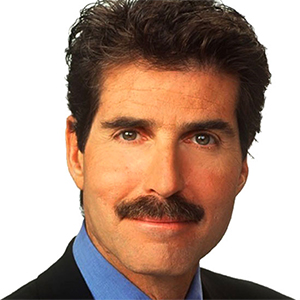
James Weinstein is vice president of Microsoft Health Futures and a former chief executive of Dartmouth Health and director of the Dartmouth Institute.
_____
©2026 Los Angeles Times. Visit at latimes.com. Distributed by Tribune Content Agency, LLC.



















































Comments