Commentary: Protect the rights of students with disabilities
Published in Op Eds
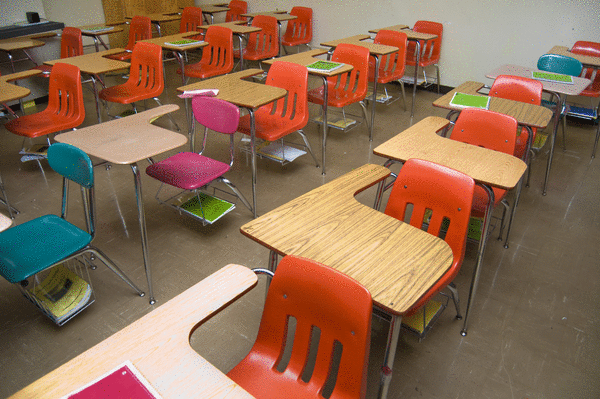
Once upon a time, a little-known agency within the U.S. Department of Education known as the Office of Special Education Programs was able to help students with disabilities whose access to schooling had been compromised. Agency officials would enforce the law and teach schools how to correct behaviors in an appropriate and supportive manner.
During the Obama administration, for instance, when parents and advocates brought complaints that students with disabilities were being improperly restrained in their classrooms, agency staff worked with states to ensure that students with disabilities were receiving appropriate discipline, not abuse. But now that many of these officials have been fired, families are being left on their own to monitor rights violations of kids with disabilities, who comprise nearly 15% of all public education students.
Since the start of President Donald Trump’s second term, the Office of Special Education Programs has seen its staffing cut in half. Now, the fears of families and children with disabilities are coming to fruition. Children are again being physically restrained in school and not allowed to switch school districts (a right afforded to their peers).
Many special education staff who lost their jobs were responsible for making sure that states and school districts follow the law known as the Individuals with Disabilities Education Act (IDEA). Passed in 1975 under a different name and renamed in 1990, the law added to decades of recognition that children with disabilities have a right to a free and appropriate education in the least restrictive environment possible, the same access to education enjoyed by other students.
But having a law on the books that protects access to education by children with disabilities is not enough. It also must be enforced.
Not surprisingly, there has been a dramatic increase over the past several years in disputes about special education, such as not providing students’ legally required instructional time. Meanwhile, a recent report from the office of Sen. Bernie Sanders, I-Vt., found that the resolution of complaints brought by parents and advocates alleging disability discrimination at the Department of Education’s Office for Civil Rights are reaching historic lows.
The evidence is overwhelming that these protections need to be reinstated. Until then, interested parties — states, universities, nonprofits and individuals — can band together to create guardrails that protect children with disabilities in school.
In this work, they should take inspiration from Northeast Public Health Collaborative, which includes seven states and New York City. Formed in 2025, the group provides transparent recommendations for public health such as vaccination schedules in the absence of trustworthy advice from the Department of Health and Human Services.
A similar coalition, the West Coast Health Alliance, which includes public health leaders from California, Hawaii, Oregon and Washington, works to produce “public health recommendations that are guided by safety, effectiveness, transparency, access and trust.”
Education officials in states committed to supporting the rights of children with disabilities should form a similar consortium that would allow for collaborative, voluntary monitoring of violations of students’ rights. These groups could also offer educational support for schools to ensure those rights are honored at the state, district and school levels.
Universities, too, could work to make evidence-based recommendations regarding special education, such as data collection and analysis procedures to inform student placements or teacher staffing assignments. And because special education is costly, those who care about students with disabilities must support candidates for federal office who pledge to fund it.
There is much about the educational system in the United States that needs improvement. But one of the greatest things about our country is that we guarantee an education to all children — including those with disabilities. For decades, we have recognized that our classrooms and communities are enriched when everyone is included. Not every nation does.
The Individuals with Disabilities Education Act helps make America great. Undermining its enforcement will only set back our country and our school children. Children with disabilities deserve full funding of their education as well as schools that are in compliance with the law.
____
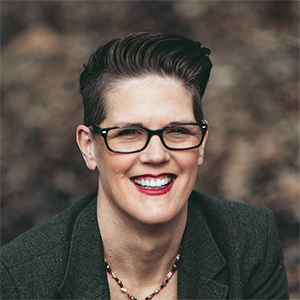
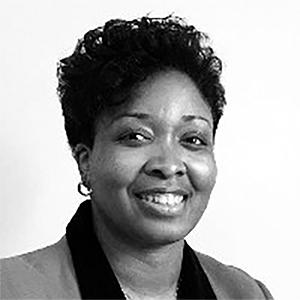
Margaret Thornton is an assistant professor of educational leadership and research at Rowan University. She studies classroom inclusion practices and increasing access to advanced courses. This column was produced for Progressive Perspectives, a project of The Progressive magazine, and distributed by Tribune News Service.
___
©2026 Tribune Content Agency, LLC.



































Comments